How to Renew Green Card
Achieving lawful permanent residency in the United States is a major milestone. For many individuals and families, it represents years of hard work, patience, and commitment to building a life in a new country. A Green Card gives you the freedom to live anywhere in the U.S., work for most employers, and travel internationally with greater ease.
However, it is easy to overlook the fact that your physical Green Card has an expiration date. While your permanent resident status generally remains valid, keeping your card up to date is essential. Understanding how to renew Green Card documents on time can help you avoid travel issues, employment delays, and other administrative problems.
In this guide, you’ll learn when to renew your card, the risks of letting it expire, and the steps involved in the renewal process.

When Should You File for a Green Card Renewal?

Timing is important when dealing with the U.S. Citizenship and Immigration Services (USCIS). Filing too early can result in your application being rejected and returned. Filing too late can leave you without valid proof of your legal status.
The 6-Month Renewal Window
As a general rule, if you hold a standard 10-year permanent resident card, you should begin the Green Card renewal process within 6 months (180 days) of your card’s expiration date.
This timeline gives USCIS enough time to receive, review, and process your application before your current card expires.
Exceptions to the Rule
There are certain situations where you may need to replace or update your card outside the standard renewal period:
- Lost, stolen, or damaged Green Cards: If your card is no longer in your possession or has become unreadable, apply for a replacement immediately, regardless of the expiration date.
- Biographic changes: If you legally changed your name because of marriage, a court order, or another reason, or if other information on your card is incorrect, you should request an updated card.
- 2-year conditional Green Cards: If your residency was granted through marriage or investment and your card is valid for only two years, you cannot use the standard renewal process. Instead, you must file a petition to remove conditions on your residence within 90 days before the card expires.
Why Renewing Your Green Card Matters?
A common misconception is that an expired Green Card means you lose your lawful permanent resident status. In most cases, your legal status remains intact.
Even so, an expired card can create practical challenges that affect your daily life.
1. International Travel Issues
Traveling abroad with an expired Green Card can be difficult. Airlines may refuse to let you board a return flight to the United States.
In addition, U.S. Customs and Border Protection (CBP) officers may require extra questioning, delay your re-entry, or take additional steps to verify your status.
2. Employment Verification Problems (Form I-9)
When starting a new job, changing employers, or completing a routine HR review, you must provide documentation proving your authorization to work in the United States.
An expired Green Card is generally not considered a valid List A document for Form I-9 purposes. As a result, employment verification may be delayed.
3. Delays With Government Services and Loans
Many government agencies and financial institutions require valid, unexpired identification.
You may encounter delays when:
- Renewing a driver’s license
- Applying for certain government benefits
- Seeking federal financial aid
- Completing loan applications
Keeping your Green Card current can help prevent these unnecessary complications.
How to Renew Green Card: Step-by-Step Process?
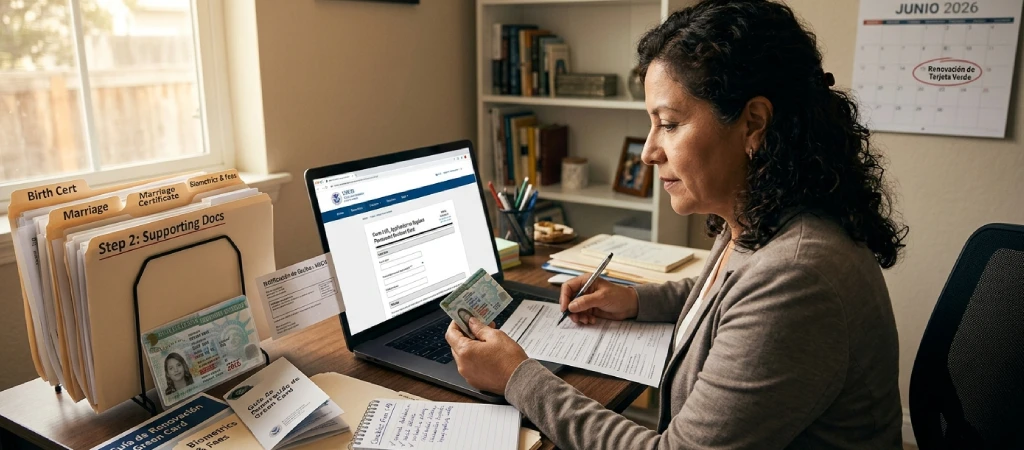
If you’re wondering how to renew Green Card documents, the process involves several important steps designed to confirm your continued eligibility for permanent residency.
Step 1: Complete Form I-90
The first step is filing Form I-90, Application to Replace Permanent Resident Card.
This form requires information such as:
- Your personal details
- Initial entry information
- Residential history
- Biographic information
Make sure all information is accurate and complete before submitting the application.
Step 2: Gather Supporting Documents
You must provide a clear copy of your current expiring or expired Green Card.
Depending on your situation, you may also need supporting documents, including:
- Marriage certificates
- Court orders
- Legal name change documents
- Other records that verify updates to your information
Submitting the correct documentation can help prevent processing delays.
Step 3: Pay the Required Fees and Complete Biometrics
The application process includes a filing fee and, in many cases, a biometrics appointment.
During the biometrics appointment, USCIS collects:
- Fingerprints
- Photograph
- Signature
These details are used to conduct routine background checks.
After submission, USCIS will send a receipt notice that can temporarily extend the validity of your card while your application remains under review.
How Alo Legal Helps You Navigate the Process?
Although the renewal process may seem straightforward, immigration paperwork can quickly become complicated. Even small mistakes, such as using an outdated version of Form I-90, choosing the wrong filing category, or submitting incomplete documents, can lead to delays, additional costs, and unnecessary stress.
At Alo Legal, we help clients manage the renewal process from start to finish. Our team carefully reviews immigration history, organizes supporting documents, prepares applications correctly, and monitors case progress throughout the process.
If unexpected issues arise, or if you need proof of status for travel or employment while your application is pending, we work to help secure the appropriate administrative extensions.
Final Thoughts
Knowing how to renew Green Card documents on time is essential for maintaining uninterrupted proof of your lawful permanent resident status. While an expired card does not usually cancel your residency, it can create obstacles related to travel, employment verification, and access to important services.
By filing within the recommended timeframe, gathering the necessary documentation, and following the correct application steps, you can complete the process more smoothly and avoid unnecessary delays.