Can a Spouse of H1B Visa Work?
For many international professionals moving to the United States, a primary concern is the career path of their partner. The question, can a spouse of H1B visa work, is central to a family’s financial stability and personal fulfillment. While the H-4 dependent visa historically did not grant work authorization, significant policy changes over the last decade have opened doors for many spouses to enter the American workforce.
Navigating these regulations requires a clear understanding of the United States Citizenship and Immigration Services (USCIS) rules. It is not an automatic right; rather, it is a privilege tied to specific milestones in the H1B holder’s green card journey.

Eligibility Requirements for H-4 Spouses

When asking can a spouse of H1B visa work, the answer depends heavily on the primary H1B holder’s status. An H-4 spouse is eligible to apply for an Employment Authorization Document (EAD) only if the H1B visa holder:
- Is the beneficiary of an approved Form I-140, Immigrant Petition for Alien Worker.
- Has been granted an extension of their H1B status under sections 106(a) and (b) of the AC21 Act (which allows for extensions beyond the six-year limit while a green card is pending).
If you meet these criteria, the H-4 spouse can apply for an EAD, which allows them to work for any employer in the U.S. or even start their own business.
The Application Process for the H-4 EAD
Once it is determined that the spouse of an H1B visa can work, the next step is filing Form I-765. This application must be supported by evidence of the H1B holder’s approved I-140 and proof of the legal marriage.
One common frustration for families is the processing time. Recent years have seen significant backlogs, leading to “gaps” in employment authorization. It is vital to file for renewals early to ensure that the spouse’s career is not interrupted by administrative delays.
Common Myths and Misconceptions
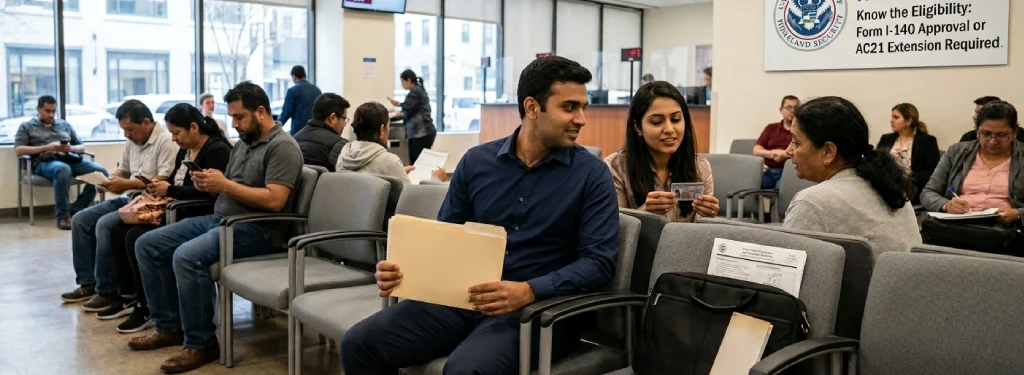
There is often confusion surrounding the question: can a spouse of H1B visa work immediately upon arrival? The answer is generally no. The H-4 holder must wait until the I-140 milestone is reached. Additionally, many people believe that the spouse is restricted to certain types of jobs. In reality, once the H-4 EAD is approved, the spouse has “open market” work authorization, meaning they can work in any field, part-time or full-time.
How Recent Legal Shifts Impact Your Family?
The H-4 EAD program has faced several legal challenges in federal courts. However, as of 2026, the program remains intact, providing thousands of families with dual-income opportunities. Understanding the current legislative climate is essential to answering can a spouse of H1B visa work in the long term, as policies regarding “dual intent” and work permits continue to evolve.
Navigating Employment Gaps and Escalations
A major issue for many families is the delay in EAD renewals. When a renewal is stuck in “pending” status, it can lead to job loss. This is where professional legal intervention becomes a necessity. A well-drafted inquiry or a formal escalation can often push a stalled application through the system, ensuring the family’s income remains protected.
How Alo Legal Can Help You Succeed?
 Navigating the complexities of whether a spouse of H1B visa can work requires more than just filling out forms; it requires a proactive legal strategy. At Alo Legal, we specialize in helping families stay together and grow together.
Alo Legal helps escalate and resolve these situations by:
- Strategic Filing: We ensure that H-4 and EAD applications are filed concurrently with H1B extensions to minimize processing times.
- Gap Prevention: We track your expiration dates and file renewals at the earliest possible window to prevent a loss of work authorization.
- Mandamus & Escalations: If your H-4 EAD is stuck in a “black hole” of administrative processing, Alo Legal can help escalate the situation with USCIS to get your case back on track.
- Coherent Documentation: We ensure all petitions are logical, professional, and free of the errors that lead to Requests for Evidence (RFEs).
We understand that an EAD is more than just a permit, it is a lifeline for your family’s future in the United States.